How to vet a Phuket developer: the filter one project in ten gets through
More than a hundred projects are being built in Phuket right now. Of every ten brought to me, about one reaches my channel. The other nine go into a folder marked no. Here is the part of that filter that deals with the company itself.

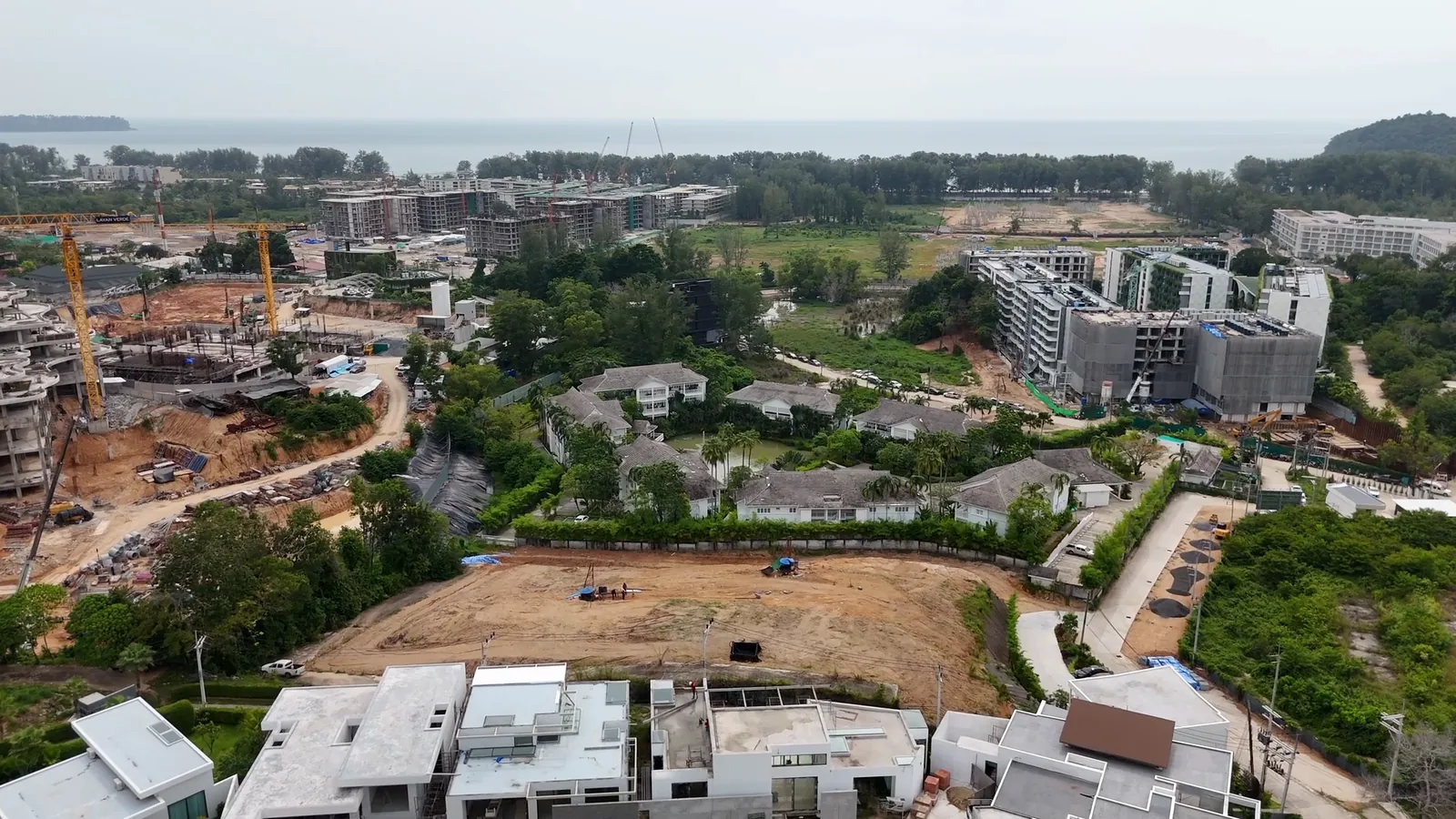
| 1 in 10 | Roughly how many of the projects brought to me reach my channel. The filter is the developer, the location, the promised yield and the payment terms. |
|---|---|
| 80 rooms / 4,000 m² | The size from which a condominium in Thailand needs an approved environmental impact assessment (EIA). Both new The Title projects in Kata and Karon, 135 and 189 units, are above it. |
| 1984 | The start of Banyan Group's history in Laguna, where about 3,000 residences now stand, rent and can be visited. A track record you check on the ground. |
| 10-12% vs 5-6% | What developers often promise a year, and what often remains after an honest recount of occupancy, management fees, running costs and the low season (my post of 31 August 2026). |
Vetting a Phuket developer is checking the company before the project: what it has already handed over, who owns and runs it, where its money comes from, and whether its land and permits are in order. On 17 October I wrote about a project on Karon, two kilometres from the beach, that sold out the day after its prices were announced. At that speed people check the floor plan and the view, and skip the company. High season starts in two weeks, and launches will keep coming.
Why the company matters so much: during construction your money goes to the developer directly, and if the build stops, you deal with it yourself. Where exactly buyer protection ends, stage by stage, I took apart in the off-plan article. Here I stay with the developer.
| What to check | Where | Red flag |
|---|---|---|
| Buildings already handed over | Visit them, talk to owners and tenants | No completed project at all |
| Directors, shareholders, filings | DBD DataWarehouse, the Thai company register | A young company, empty filings, directors you never meet |
| Who really stands behind it | Ask directly, compare with the register | Investors who keep entering and leaving |
| Where the build money comes from | Annual reports if listed, the register if not | The build depends on new buyers’ instalments |
| Land, EIA, building permit | Land Office through a lawyer, the approvals themselves | A full contract and a large payment before the EIA is approved |
| How the project is sold | The agency agreement, who sells it | Commission paid to anyone, anywhere, without a contract |
Why does only one project in ten get through?
More than a hundred projects are under construction in Phuket. In my channel you see a handful, and that is deliberate.
Of ten projects brought to me, roughly one reaches the channel. The rest I take apart for myself, ask the developers uncomfortable questions and put them in the “no” folder. (from my post of 31 August 2026)
Four filters do the work: the developer, a location nobody will want to buy from you in five years, an inflated yield, and a vague payment scheme. This article covers the first. For the payment scheme see developer payment plans; for discounts that should worry you, this one.
Which developers in Phuket do I consider reliable?
In July I named, as examples, developers I consider reliable:
- Sansiri. More than forty years on the market and hundreds of handed-over projects across Thailand; this autumn it is launching in central Phuket.
- Laguna Property (Banyan Group). Its history in Laguna goes back to 1984, and about 3,000 residences there stand, rent and can be visited today. Banyan Group is listed in Singapore.
- Rhom Bho Property (The Title) and its parent AssetWise, both listed on the Stock Exchange of Thailand.
- Wallaya Villas Development, Boat Pattana, Capstone Asset and Origin Vertical.
The list is not exhaustive and it is not a rating. A good developer can still have a weak project: a poor plot, an inflated price, a unit with no view. Each project is checked on its own. A company missing from the list is not automatically bad either; I may simply not have seen enough of it.
You should also know this: my agency works with several of these developers, AssetWise and Sansiri among them, and our commission is paid by the developer, not by you. On 5 October, before the Kata and Karon price lists came out on 16 and 17 October, I wrote that The Title projects there are a case where I am calm about quality. Judge that with the disclosure in mind, and check them by the same table as anyone else. The projects themselves are in the Kata and Karon article.
What has the company already handed over?
This is where I start: buildings that stand, where people live, units are rented and tenants come back. Renders come later.
Go to one of the developer’s finished buildings. Look at how it has aged: the facade, the pool, the lifts, the garden. Ask who manages it. A developer with its own management company stays tied to the building after handover, and that shows on the ground.
I am much calmer when I see a finished complex in central Bangkok, and then the same brand in Phuket. (from my post of 12 August 2026)
Ask two more things. Were earlier projects delayed, and how did the company get out of it? And were the delayed buildings finished in the end? A normal Phuket build takes 2-3 years, and more on red flags in timing is in the off-plan article.
One test I like: do Thais buy in this project? Locals know the market and know which developers finish what they start.
Who really stands behind the company?
Under Thai law there will always be Thai founders in a Thai company. So the shareholder list does not tell you who decides. You need the real people behind the project and the source of their money.
Start with the register. DBD DataWarehouse is the database of Thailand’s Department of Business Development, and since 2023 much of it is in English. For a Thai company it shows:
- the directors and who may sign for the company;
- shareholders by nationality;
- the filed balance sheet and profit and loss.
What you want to see is several years of filings with real revenue, and directors who are the same people presenting the project to you. A company registered last year, with nobody you have met in it, needs explaining.
Listed developers give you more. AssetWise and Rhom Bho trade on the Stock Exchange of Thailand, Banyan Group in Singapore. Their audited annual reports show the company’s debt and cash flow. They will not show you one project’s budget, but they let you judge how much margin of safety the company has.
Then ask about investors. If a project’s investors have changed several times, one group before Covid that left, another after, then a third, it almost always means there is not enough money for construction. To me that is one of the most alarming signals on the market.
Where does the money for the build come from?
I prefer developers with strong Asian financing and steady local support. I am wary of companies that depend entirely on foreign buyers’ money, and of projects that need a constant inflow of foreign buyers to keep going.
Long-stalled projects in Phuket do exist. Most often they belong to small local companies without serious financing, which in effect build on buyers’ payments. When new buyers slow down, the concrete slows down with them.
How a project is sold tells you about its money too. To sign an agency agreement with a developer with a good reputation, an agency has to provide a pile of documents and, at the very least, a Thai company. A shaky developer pays commission in any currency, to any country, with no agreement. You can spot it by who sells it: everyone, including bloggers and agents who have never been to the island.
And the yield in the brochure. As of August, developers often promise 10-12% a year, and after an honest recount of occupancy, the management company’s share, running costs and the low season, 5-6% often remains. That is a normal figure; you just need to see it before the deal. A promise of 12-15% a year without a calculation is, in 99% of cases, a scam. How gross yield becomes net.
Does the project have its land, EIA and building permit?
A condominium in Thailand with 80 or more rooms, or a usable area of 4,000 m² or more, needs an approved environmental impact assessment (EIA). Both The Title projects, with 135 and 189 units, are above that line. Near the coast and beaches an EIA can be required at any size.
Ask for three documents and give them to a lawyer, not a sales manager:
- The land title. A full title deed (chanote) in the name of the developer’s company. At the Land Office your lawyer can see whether the plot carries a registered mortgage. If it does, find out how and when it is released before your unit is transferred to you.
- The EIA approval.
- The building permit.
A reservation at a launch, before the EIA is approved, has a safety net: since 31 January 2025 the standard reservation form lets you cancel if the permit or the EIA is not obtained by the agreed date. A full sale contract with a large payment is different. Before that, the approvals should exist.
Is a first project from a new developer too risky?
Higher risk, but not an automatic no.
A large developer with an international name entering the island for the first time is one situation. A company where nobody can say who the developer is or where the investment comes from is another. I know a company with a second project on the island where both have stalled, with no track record and many questions about the money. I do not sell those, and I tell clients: let them finish, then we will talk.
My rule for the first case: a developer with its first or second project in Thailand must price it noticeably below the market, because it still has to prove on a thin margin that it can build here. Market price plus zero history means you pay full price for a startup’s risk.
What does an international brand on the facade guarantee?
On its own, nothing. A hotel name can mean two very different things. Either the brand takes part in the project, in design, quality control and later management, or it only sells the right to use its name. Ask which one you are buying, and ask for the brand’s role to be written into the documents.
A brand is checked the way a developer is: by what it has already delivered, in Thailand and preferably in Phuket.
What to check before your viewing trip
- Write down the developer’s legal name, not the brand, and look it up in DBD DataWarehouse.
- List its handed-over buildings and put two of them on your viewing route.
- Ask the agent who stands behind the company and where the build money comes from. Listen to how they answer.
- Ask for the title deed, the EIA approval and the building permit, and send them to your lawyer before you pay anything beyond a reservation.
- Recount the promised yield yourself.
If you already have a project in mind, send it to me with the developer’s name. I will tell you whether it sits in my “yes” or my “no” folder, and why. Below is my checklist of 30 questions to ask before a deal.
FAQ
Who are the most reliable developers in Phuket?
The ones whose finished buildings you can visit and whose finances you can read. As of July 2026 the developers I name as reliable include Sansiri, Laguna Property (Banyan Group), Rhom Bho Property (The Title), AssetWise, Wallaya Villas Development, Boat Pattana, Capstone Asset and Origin Vertical. It is an opinion on a date, the list is not exhaustive, and each project of theirs still gets checked on its own.
How do I check a Thai developer in the company register?
Through DBD DataWarehouse, the database of Thailand's Department of Business Development. Since 2023 part of it is in English: directors, who may sign for the company, shareholders by nationality and the filed balance sheet and profit and loss. Look for several years of filings with real revenue, and for directors who are the people presenting the project to you.
Does a Phuket condo project need an EIA?
Yes, from 80 rooms or 4,000 m² of usable area, and near the coast possibly at any size. Since 31 January 2025 the standard reservation form lets you cancel if the EIA or the building permit is not obtained by the agreed date. Before a full contract and a large payment, ask for the approval itself.
Is a first project from a new developer too risky?
It is a higher risk, not an automatic no. A large developer with an international name entering the island is one case; a company where nobody can say where the money comes from is another. A developer with its first or second project in Thailand should price it noticeably below the market.
Does an international brand guarantee completion?
No. Ask whether the brand takes part in the project, in design, quality control and later management, or only sells the right to use its name. Ask for its role in writing.
Who really owns a Thai developer if the shareholders are Thai?
Thai law puts Thai founders into every Thai company, so the papers alone do not show who runs it. Ask who the real people behind the project are, where the investors come from and whether they have changed. Investors who keep entering and leaving a project are one of the most worrying signals.
Sources
- Figures and positions come from Viktoria Shimanovich's own channel posts (in Russian), t.me/vikishiman. More than a hundred projects, one in ten reaching the channel, protection resting on the developer, the company with a second project where both have stalled, the 10-12% promised against 5-6% after recount: 31 August 2026. Money paid to the developer directly, Banyan Group since 1984 and about three thousand residences in Laguna, a first or second project in Thailand priced below the market: 12 August 2026. Investors changing, commission paid anywhere without a contract, a reputable developer asking an agent for documents and at the very least a Thai company: 23 March 2026. Thai founders by law, the people really behind a project, the developers I consider reliable and the questions to ask: 21 July 2026. Asian financing and local support against dependence on foreign buyers' money, brand involvement, 12-15% promises as a scam in 99% of cases: 6 June 2026. Developer history, how complexes look after years, own management company, whether Thais buy, small local companies building on buyers' money: 9 June 2026. Sansiri, more than forty years on the market and hundreds of handed-over projects, launching in central Phuket: 28 September 2026. AssetWise, brand The Title, in Kata and Karon, 135 and 189 units: 5 October 2026; price lists: 16 October and 17 October 2026. The Karon project two kilometres from the beach sold out the day after prices were announced: 17 October 2026.
- EIA threshold: a condominium needs an environmental impact assessment when it has 80 rooms or more, or a usable area of 4,000 m² or more; projects near the coast and beaches may need one regardless of size: ONEP, Office of Natural Resources and Environmental Policy and Planning; C9 Hotelworks on the amendment adding the floor area test.
- Condo reservations became a contract-controlled business under an OCPB notification in force from 31 January 2025, with a mandatory reservation form; it allows cancellation if the building permit or the EIA is not obtained by the agreed date: Baker McKenzie; Tilleke & Gibbins, form of reservation contract.
- Company register: DBD DataWarehouse shows a Thai company's directors, signing authority, shareholders by nationality and filed financial statements, in English since the 2023 update: Forvis Mazars, updated DBD DataWarehouse; DBD DataWarehouse.
- Land and encumbrances: mortgages, easements and other encumbrances on land must be registered at the Land Office where the land is, so the developer's plot can be checked there through a lawyer: Tilleke & Gibbins, due diligence checklist for property buyers.
- Rhom Bho Property (TITLE) is a subsidiary of AssetWise; the Stock Exchange of Thailand approved its move from the mai to the SET main board, effective 30 January 2026: AssetWise news. AssetWise is listed on the Stock Exchange of Thailand as ASW: SET listed company snapshot. AssetWise bought its stake in Rhom Bho Property in July 2023: Bangkok Post.
- Banyan Group is listed in Singapore as Banyan Tree Holdings Limited, SGX: B58: Banyan Group press release.
- Disclosure: my agency, Create Memories Co., Ltd., works with developers named here, including AssetWise (The Title) and Sansiri, and is paid its commission by the developer; the buyer pays us no commission. The list is my professional opinion as of 21 July 2026 and is not exhaustive.
- This is not legal or investment advice. Have the company, the land and the contract checked by a lawyer who works only with property in Thailand.