Best area to buy in Phuket: year-round demand or one season
Two people buy a one-bedroom on the same island in the same month. One rents it all year. The other watches it stand empty from May to October. The price per metre was similar, and so were the pool photos. What differed was the area, and who actually lives there.

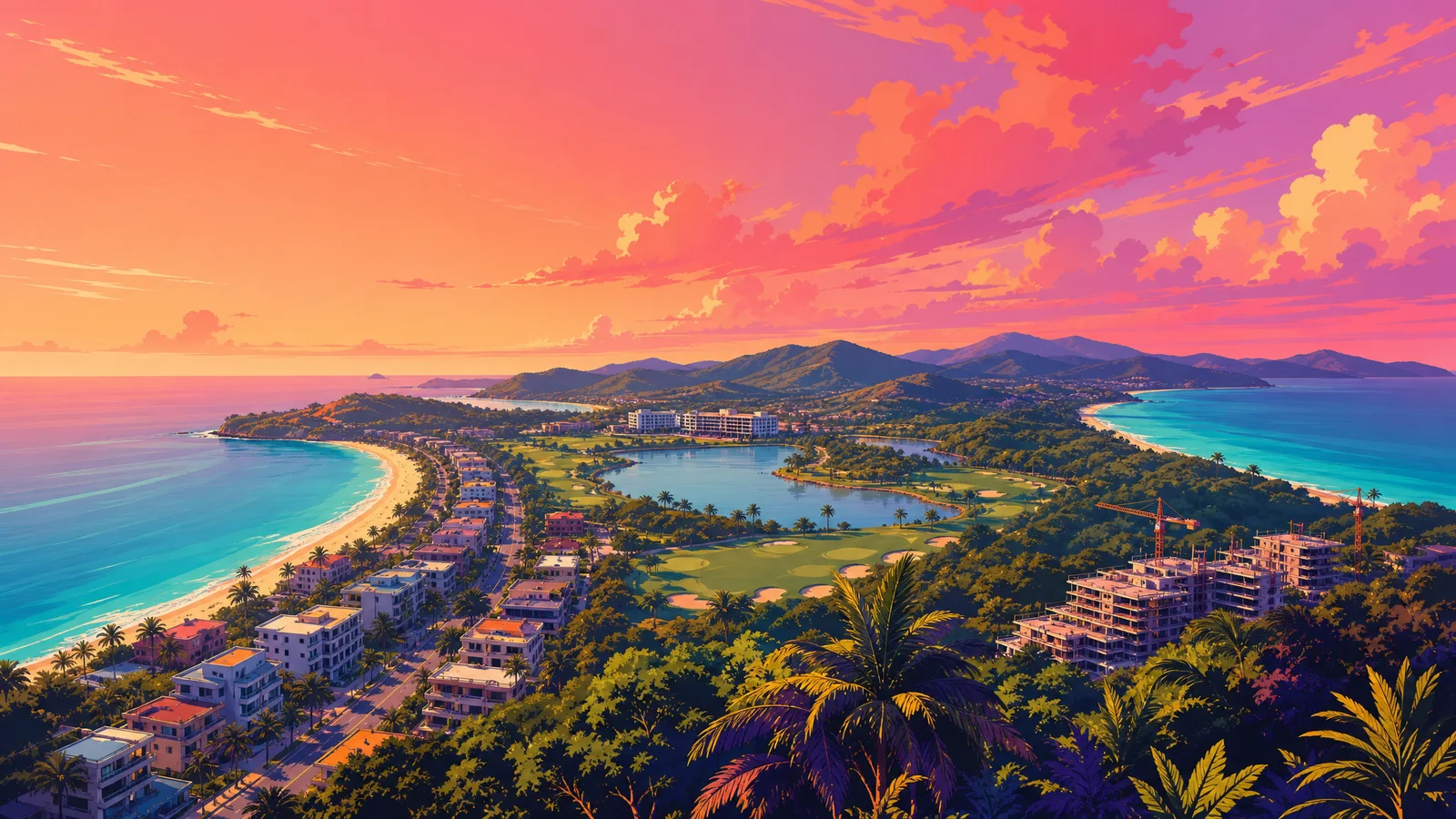
The best area to buy in Phuket is the one that fits the job you are buying for: rent all year, a holiday let, a home for your family, or price growth over several years. High season runs from November to April and starts in three weeks. People are booking December viewings now. Before you fly, narrow the list to one or two areas. A week of viewings across the whole island usually ends with a choice made by the pool photos.
So the short answer first. Choose the job, then the area.
| The job | Where to look | What to expect |
|---|---|---|
| Rent all year | Bang Tao and Laguna, Kamala, Surin, within walking distance of the beach | Tourists, expats and families rent the same flats at different times; occupancy near 85% a year |
| Holiday let | Kata and Karon | One tourist zone, most of the island's guests; almost no land left for new projects |
| Life with a family | Bang Tao and Laguna; the centre of the island; a house in Thalang | Schools and Bangkok Hospital near Laguna; annual leases in the centre and Thalang |
| Calm life in the south | Nai Harn and Rawai | Rents on the level of Bang Tao, Kamala and Surin, very few projects |
| Long-term price growth | The north: Nai Yang, Naithon | Lower entry price, infrastructure still arriving, a 3-5 year horizon |
I have rented in the south of the island since 2013; now we live in Chalong, at the foot of the Big Buddha hill. I sell across the island, and this is what I tell clients before they book flights.
Start with the job, not the beach
Most people compare price per metre, floor area and the pool. What usually decides the rent is the format of the location, more than the developer or the view.
Take two one-bedrooms at a similar price: one a few minutes from the beach in Bang Tao, the other in a resort condo twenty minutes inland. What a flat earns depends on who rents it, and a sunset from the balcony does not change that much.
So write the job down in one sentence before you open a single listing. "Rent all year with a manager." "Live here with children in school." "Hold for five years and sell." Each sentence points to a different part of the island.
Year-round demand: why walking distance beats a pool view
There are two very different products that both get called a condo in Phuket.
The first is a resort condo away from the sea. It has the best marketing: a big green territory, quiet, a lower price per metre. It also has a built-in limit. A tenant twenty minutes from the beach needs a car or a bike for coffee, groceries and dinner. These units live on the tourist season from November to April, and the rest of the year occupancy falls through.
The second is town plus beach on foot. Morning at the sea, afternoon working from a cafe, dinner and a walk home. More than tourists pay for this:
- tourists book by the night in high season;
- expats and remote workers rent by the month, often for three to six months;
- families with children in international schools take the whole school year.
Their seasons do not coincide, which is why occupancy in these locations holds near 85% a year instead of collapsing in the low season.
It shows on resale too. A resort condo goes to an investor who compares it with a dozen others and is in no rush. A flat a few minutes from the sea is also bought by people who want to live in it, and they decide faster.
The catch: a developer's "walking distance" is not always walking distance. Too often it means five minutes by car, so I go and check. On Karon I checked the "walking distance" of a new launch myself. By bike from the site to the beach: 30 seconds. On foot, about seven minutes, with pavements the whole way. That one passed. Not every project does.
The seasonal math: high season against low
The island's year splits almost exactly in half: 181 days of high season, 184 days of low. Here is what that does to a decent one-bedroom inside a resort territory by the sea, on the typical rates and occupancy from my posts. It is an illustration, not a quote for a unit.
| Period | Months | Rate, baht a month | Occupancy | Gross, baht |
|---|---|---|---|---|
| December and January | 2 | 120,000-150,000 | about 80% | 192,000-240,000 |
| November, February to April | 4 | 90,000-95,000 | about 80% | 288,000-304,000 |
| May to October | 6 | 45,000-50,000 | about 50% | 135,000-150,000 |
| Year, gross | 12 | 615,000-694,000 |
In summer the unit rents for half the price and half as often. The common mistake is a January rate of 130,000 baht times twelve: 1.56 million baht a year. The honest gross number is less than half of that, before the management company's share. Line by line: low-season rental rates and gross versus net yield.
In my posts I rounded this unit to about 780,000 baht a year, which works out at about 80% occupancy all year round. With summer at 50%, the year comes out lower, so plan on the lower number.
The point for choosing an area: where expats, schoolchildren's families and remote workers live alongside the tourists, the summer drop is noticeably softer, because that audience has no season. Where only tourists come, the table above is your year. Knight Frank's market report says the same in its own words: projects that rely on short-term rental see larger swings in occupancy.
Bang Tao vs Kamala vs Surin
All three are on the west coast and work on the "town plus beach on foot" principle. Plots with the beach, restaurants, shops and schools side by side are built up or bought for specific projects. New sites of that quality no longer come to market. Everything launching now moves further from the sea.
Bang Tao is the part of the island tenants understand best. Families, expats and tourists with money come here, so occupancy holds all year. International schools, Bangkok Hospital, Boat Avenue and Porto de Phuket are close; the airport is about twenty minutes away.
Inside Bang Tao sits Laguna: about 400 hectares along the beach, six international hotels, an 18-hole golf course, free shuttles and boats, and one master plan, so nobody builds a block in front of your view. No free land is left in the established part. People ask me for "something like Laguna, but elsewhere and cheaper". My answer:
Laguna can only be in Laguna. You can find a good project almost anywhere on the island, but nobody can repeat the territory.
Kamala works the same way. I have less material on it than on Bang Tao or Surin, so I will keep this short: with Kamala, judge each project by how far the building really is from the sand, and measure that yourself.
Surin is the scarce one: one of the most private beaches on the island, next to Amanpuri, with decades of strict limits and almost no new building. Free land is almost gone and modern projects are a handful. When a new one appears, it gets attention fast.
So, Bang Tao versus Surin for investment: Bang Tao for depth of demand and choice, Surin for scarcity and status, with a smaller list to choose from.
Kata and Karon: the holiday-let zone with no land left
For renting, Kata and Karon are one tourist zone, where most of the island's guests go. The area formed long ago and the last small plots are taken. Anything within a kilometre of the sea will be expensive here.
Two new projects are launching now, both from AssetWise. The Kata one is 500 metres from the sea, the Karon one 345 metres. Indicatively, one-bedrooms in both will start from about 4 million baht, roughly $121,000. That is an indicative figure given before the official presentation on 17 October. I will name exact numbers when I have the price list. For comparison, leftover one-bedrooms in neighbouring sold-out projects go from 5.5 million baht, roughly $167,000, and not with the best views.
What to expect from the rent: most of the guests are holidaymakers, so the year follows the season more closely than in Bang Tao. I do not have a separate low-season figure for Kata and Karon, so I will not give you one. Count it on the seasonal table above, and anything better is a bonus.
Living with a family: Laguna, the centre or a house in Thalang
With children, the beach is not the first question. Schools, a hospital, shops and how easily you cross the island are.
Laguna and Bang Tao have international schools and Bangkok Hospital, and inside the resort you do not need a car. It is also the most expensive way to solve it.
In the centre of the island, a new freehold project between the Old Town, Patong and the business district starts from 2,840,000 baht for 29 m², roughly $86,000. That is the launch price after a 150,000 baht discount valid until 31 October 2026; the list price is 2,990,000. You do not overpay 20-30% for being close to the water. The investment logic is different: one annual lease to an expat, no changeovers, no low season, no management company taking 30-40%, and the tenant pays the utilities. My guide is 6-8% a year. Completion is in the second quarter of 2028, so read what can go wrong with off-plan first.
Thalang is a quiet green area away from the tourist noise. A ready 148 m² house with four bedrooms and its own land starts from 5,460,000 baht, roughly $165,000, while a 54 m² one-bedroom by the sea costs from 9 million. An international school is about eight kilometres away. Many people who move here are not ready to buy and rent houses on annual contracts. Around 6% gross, 5-6% net: lower than a resort condo, and steady every month.
I do not take on developers who came to the market yesterday: buyer protection during construction in Thailand is close to none. More on the family page.
The south: Nai Harn and Rawai
For me Phuket always had two reference points: Bang Tao and Nai Harn. Both premium, and they feel different. I live in the south because of the space, the sensible roads and, in my view, the best sunsets on the island. Restaurants here are 20-30% cheaper than in the premium areas further north.
There is no classic first line: hotels hold it. When I counted in February, Nai Harn and Rawai had about ten projects under construction, and three or four were worth considering.
Rents here are on the level of Bang Tao, Kamala and Surin, while life feels calmer and less touristy. Projects 500-600 metres from the sea cost about the same as comparable ones in Bang Tao. There is less to choose from, and demand stays steady.
The north: a 3-5 year bet, not a rental yield
When people ask where to get in cheaply without buying an empty field, I say: look north.
New projects in Nai Yang start around 124,000-126,000 baht per m², roughly $3,750-3,800. In established west-coast locations by the sea a metre costs from 170,000 baht and up. The gap is nearly one and a half times, and it narrows as infrastructure arrives.
A 7,000 m² mall is being built in Nai Yang, five minutes from the airport; the opening is announced for this autumn. So far that is an announcement, not an opening. For decades Nai Yang lived on "airport plus hotels plus an empty beach", and a supermarket, a gym and a pharmacy are what it lacked to become a place people live all year. Your flat's value is not raised by your developer alone: the mall, a beach club, a hotel and a school each put their money into the area. Bang Tao went down that path about 15 years ago.
Naithon, next door, is quiet even in season, and most people on its beach live on the island. Low-rise projects are going up in the green; land by the sea still exists here.
Who it suits: people with a horizon of three years or more. There is no quick nightly-rental yield yet. Bang Tao takes today's demand; the north takes the demand of three to five years from now. That is my estimate, not a guarantee.
The areas side by side
| Area | Who rents | Entry price I can source | Source |
|---|---|---|---|
| Bang Tao, Laguna | Tourists, expats, school-year families; all year | 1-bedroom 45 m², 920 metres from the beach, from 7,500,000 baht (about $227,000) | post |
| Kamala, Surin | Same mix; Surin smaller and more private | Established west coast from 170,000 baht per m² | post |
| Kata, Karon | Holidaymakers, the main tourist zone | 1-bedroom indicatively from about 4 million baht, before 17 October | post |
| Nai Harn, Rawai | Calmer long-stay life; rents on the level of Bang Tao | Comparable to Bang Tao projects | post |
| Centre of the island | Annual leases to expats | 29 m² from 2,840,000 baht with the launch discount to 31 October | post |
| Thalang | Annual leases to families | House 148 m² from 5,460,000 baht | post |
| Nai Yang, Naithon | Growth over 3-5 years, little nightly rent yet | New projects from 124,000-126,000 baht per m² | post |
Prices as of the post dates, in baht. They move.
What to do before your December viewings
You have three weeks before the season starts. Use them for the work that does not need a plane.
- Write the job in one sentence. If you have two jobs, rank them.
- Pick one or two areas from the table. Not five.
- For every unit on your list, ask for a calculation by season, not a January rate times twelve, and for the annual running costs.
- Ask whether the unit is freehold or leasehold. Foreigners can together own up to 49% of the total area of all units in a condominium under the Condominium Act; outside that quota you are in leasehold, and the difference matters.
- Plan to check "walking distance" yourself, on foot, during the viewing.
- Go through the buyer's checklist before you sign anything.
If you want a shortlist by job and budget, the projects I have looked at myself are in the catalogue. Or write to me on WhatsApp with the one sentence about your job, and I will tell you which one or two areas to fly in for.
Frequently asked
What is the best area to buy property in Phuket?
The one that fits your job. For year-round rent, a condo within walking distance of both the beach and the town: Bang Tao and Laguna, Kamala, Surin. For a holiday let, Kata and Karon. For living with children, Laguna, the centre of the island or Thalang. For price growth over three to five years, the north: Nai Yang and Naithon. Decide the job first and the list of areas shrinks to one or two.
Is Bang Tao or Kamala better for buying a condo?
Both work on the same principle: beach, restaurants and shops on foot, so the flat rents to more than one kind of tenant. Bang Tao is the part of the island tenants understand best, with Laguna, international schools and Bangkok Hospital nearby; families, expats and tourists with money come here, so occupancy holds all year. I have less material on Kamala, so judge each project there on its own. In both, check the distance from the specific building to the sand yourself, not the distance from the district.
Bang Tao vs Surin for investment?
Bang Tao gives you the part of the island tenants understand best: families, expats and tourists with money, so occupancy holds all year. Surin gives you scarcity: one of the most private beaches on the island, next to Amanpuri, with almost no free land and only a handful of modern projects. Buy Bang Tao for a working rental, Surin if you value a rare asset and accept a smaller choice.
Which Phuket areas rent year-round, not just in high season?
Areas where the beach and the town are both within walking distance: Bang Tao, Kamala, Surin. Tourists book by the night in high season, expats and remote workers rent by the month, families with children in international schools take the school year. Three audiences with different seasons keep occupancy near 85% a year. Annual leases in the centre and in Thalang also avoid the low-season drop, at a lower yield.
Where do expat families live in Phuket?
Mostly around Bang Tao and Laguna, for the international schools, Bangkok Hospital and a resort where you do not need a car. Families who live here permanently also choose the centre of the island, between the Old Town, Patong and the business district, and houses in Thalang, a quieter green area with an international school about eight kilometres away. The south, Rawai and Nai Harn, suits those who want a calmer, less touristy life.
Is the north of Phuket (Nai Yang) a good investment?
It can be, for someone with a horizon of three years or more and patience. New projects in Nai Yang start around 124,000-126,000 baht per m², against 170,000 and up in established west-coast locations. A 7,000 m² mall is being built five minutes from the airport. There is no quick nightly-rental yield there yet, and any growth figure is my estimate, not a promise.
 Phuket on camera@viktoria.realestate.phuketView
The vetted project catalogue
Projects that passed checks on title, developer record and real occupancy, with a yield model for each. Updated weekly.
Open the catalogue →Know when the next one is out
New articles on Phuket property, one email when something is published. No newsletters.
Read next
What it costs to own a condo in Phuket: every expense after the keys
Yes, Thailand has an annual property tax, and on a condo it is small. The bigger lines are the common area fee, utilities and, if you rent it out, the
Distressed units and assignments in Phuket: where below-market prices come from
Phuket condo assignments and distressed resales explained: why the price is below the developer's list, what you pay and when, the fee question and th
Phuket developer discounts: when 40% off is a warning
Phuket off-plan discounts explained: three normal reasons a developer cuts the price, five warning signs, and how to check what base a discount is cal