What a condo is in Thailand and how it differs from an apartment
Before a viewing trip people ask me about views, floors and rental income. Almost nobody asks what exactly they will own. In Thailand that question has a precise legal answer, and it decides whether the unit can be in your name and how the money has to arrive.

| 49% | The maximum share of a condominium's total unit floor area that can be registered to foreigners. It is counted in square metres, not in the number of units. |
|---|---|
| 30 years | The maximum term of a registered lease of immovable property under Thai law. This is the ceiling for an apartment building unit or for the land under a villa. |
| 10-15% | How much cheaper a leasehold unit usually is than freehold, sometimes more (my post of 1 October 2026). When the foreign quota in a building has run out, leasehold is often 5-10% cheaper (my post of 13 May 2026). |
| 60-100 baht | The usual common area fee per m² a month in Phuket. For a 50 m² one-bedroom in a decent project, my October 2026 example, that is 3,000-5,000 baht a month, paid whether you come to the island or not. |
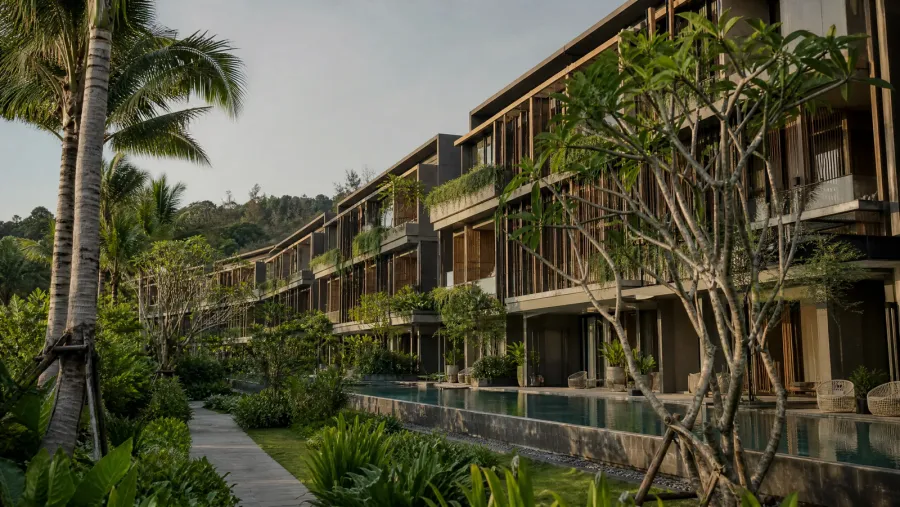
A condo in Thailand is a unit in a building registered under the Condominium Act B.E. 2522: you own the unit itself, with its own title deed, and you share the land, the lobby, the pools and the garden with every other owner. High season started in November. The rains stopped on 30 October, and the island is filling up. If you plan to come and view property this winter, settle what you are actually buying before you fly and before the first transfer, because in Thailand the form of title decides how you have to pay.
Below is what you would own, and how a condo differs from an apartment building and a villa, since listings in English mix these words up and Thai law keeps them apart.
Condo, apartment building, villa: what you actually own
As of 9 November 2026.
| Condo | Apartment building | Villa | |
|---|---|---|---|
| What is yours | The unit, plus a share of the land and common areas | Nothing as owner; the building has one owner | The house; the land is not yours |
| Document | A title deed for the unit, issued under the Condominium Act | A lease agreement with the building owner | Ownership of the house registered in your name, a lease on the land |
| In a foreigner’s own name | Yes, freehold, within the 49% foreign quota | Only as a tenant | The house yes, the land no |
| Term | No end date for freehold; leasehold usually 30 years | Up to 30 years | House permanent, land lease up to 30 years |
A condo unit can be fully yours, while the land under the building you own only as a share, together with all the other owners. A foreigner cannot register land in their own name.
If you are choosing between a unit and a house as an investment, I compared them separately in condo vs villa in Phuket. Here I stay with the legal side.
What the Condominium Act says you own
The Act splits a condo building in two. Personal property is your unit. Common property is everything that is not a unit: the land under the building, the structure, the corridors, the lifts, the pool, anything meant for joint use.
You get a title deed for the unit. It carries your name, the plan of the unit and your share in the common property. The share matters in practice, because it decides how much of the common expenses you pay.
Neither a signed contract nor full payment makes you the owner yet. Ownership is registered at the Land Office, and only after that is the unit legally yours. You do not need to live in Phuket all that time: everything can be done through a representative with a power of attorney. (from my post of 31 October 2026)
Until registration, what you have is a contract with the developer. During construction you cannot walk into your future unit every month. You follow the progress of the project by photo and video and visit the site when you can. With a villa, a separate technical supervisor can be brought in.
Why an “apartment” in Thailand is a different thing
In Thai practice an apartment building is a building with one owner and one title for the whole building. Nobody registered it under the Condominium Act, so there are no titles for individual units. A unit there cannot be sold to you as property. It can only be leased.
A registered lease of immovable property is capped by Thai law at 30 years. So if you are offered an “apartment” and the seller talks about ownership, ask one question: does each unit have its own title deed under the Condominium Act? If not, you are buying a lease, whatever the brochure says.
The reverse also happens. Some English listings call condo units “apartments” simply because that is the everyday word. What counts is how the building is registered.
The 49% foreign quota: how it is counted
In any condominium, no more than 49% of the total floor area of all units can be registered to foreigners. The rest goes only to Thai citizens or Thai companies.
People often count units instead.
If a project has 100 units, that does not mean 49 apartments can be bought by foreigners. (from my post of 13 May 2026)
What counts is square metres: the total unit floor area and how much of it is already registered to foreigners. A few large units can take a big piece of the quota.
People also fear that the purchase will be cancelled later. Once ownership is registered, it stays. What you check is whether there was a free slot in the quota on the day your unit was registered at the Land Office. So before anyone pays for a freehold unit, I check four things: whether there is free foreign quota for this unit, what share of the quota is already used, whether this particular unit can actually be registered freehold, and whether the contract guarantees the quota.
Freehold quota in good projects goes first, and those units cost more. In general I quote leasehold at 10-15% below freehold, sometimes more. If the quota is gone, there are still options. Then taking leasehold is often 5-10% cheaper. You can look at a similar unit in another project, wait for a foreign owner to sell their freehold, or reserve earlier next time. How freehold and leasehold compare over the years, I covered in freehold vs leasehold in Phuket.
How the money has to arrive
The Act ties foreign ownership to money coming into Thailand in foreign currency. The Land Office wants proof of that when it registers the title. In practice you send an international SWIFT transfer from abroad into the developer’s account, and the developer’s bank issues the confirmation. For transfers from $50,000 that is the FET form; below that the bank confirms in writing. Only the bank that received the money can issue it.
Decide the form of ownership before you transfer the money. For freehold in a foreigner’s name the payment must come from abroad by SWIFT into the developer’s account, and then the developer’s bank issues the certificate that goes to the Land Office at registration. (from my post of 29 October 2026)
I have had clients who paid as if for leasehold and then decided on freehold. We had to agree a refund with the developer and send the money again. The step-by-step version is in how to pay for property in Thailand from abroad.
The juristic person, the management company and your share of the costs
A registered condominium also registers a juristic condominium. Under the Act it is a juristic person, a legal entity, and its job is to manage and maintain the common property that all the owners share.
Buyers often confuse it with the management company that runs the day-to-day work in the building. They are not the same thing. Before you buy, ask who the juristic person’s manager is and which company does the work on the ground.
Every owner pays a share of the common expenses in proportion to their share in the common property. The law calculates that share from the ratio of unit prices at the time the condominium was registered; in practice the monthly fee is usually charged per square metre of the unit. Read the regulations and your title deed to see what applies in your building.
In Phuket the common area fee is usually 60-100 baht per m² a month. For a 50 m² unit that is 3,000-5,000 baht a month. It covers security, cleaning of the common areas, pools, lifts, landscaping and the reception, and you pay it even in a year when you never came to the island. On top of that there is usually a one-off sinking fund of 500-700 baht per m² at purchase, plus annual contributions to the fund. The full annual bill is in the cost of owning a condo in Phuket.
A villa: the house is yours, the land is not
A foreigner in Thailand cannot own land. That comes from section 86 of the Land Code. It does not mean a foreigner cannot own property. With a villa, the house can be registered in your name freehold, and the land under it is held on a lease, up to 30 years by law.
In one finished villa in Nai Thon that I wrote about in October, the purchase came as three contracts: the villa freehold, the land leasehold, and the maintenance of the estate. Section 540 of the Civil and Commercial Code caps a lease of immovable property at 30 years, and anything after that depends on what the parties agree then. So read the land lease as carefully as the papers on the house. A freehold condo unit has no land lease to read.
What to check before you fly
For any unit you shortlist, write down three facts: whether the building is registered under the Condominium Act with a title deed for each unit, whether there is free foreign quota for this specific unit, confirmed in writing, and which account the money leaves from, in what currency. If any of these is unclear, sort it out before the flight. The rest of the process, from reservation to registration, is in how to buy property in Thailand as a foreigner.
The quota, the title and the payment route are only part of what needs answering before a deal. I put the full list into a checklist, 30 questions before you sign. Take it to the viewings and ask the developer every question in writing. The search and the deal support are free for you as the buyer, because the agency’s fee is paid by the developer.
FAQ
Can a foreigner own a condo in Thailand outright?
Yes. A foreigner can hold a condo unit freehold, in their own name, with no end date: live in it, rent it out, sell it, leave it to heirs. Two conditions. The unit must fit inside the building's foreign quota, 49% of the total unit floor area. And the purchase money must come into Thailand from abroad in foreign currency, which the receiving bank confirms in writing, usually with the FET form. The Land Office checks both at registration.
What is the difference between a condo and an apartment in Thailand?
A condo building is registered under the Condominium Act: every unit has its own title deed, and the owners share the land and common areas. An apartment building in Thai practice has one owner and one title for the whole building. Its units cannot be sold into ownership. A foreigner there can only take a lease, capped by law at 30 years. Marketing in English uses both words loosely, so check which one the building legally is.
What happens if the 49% foreign quota is full?
Your options are leasehold on the same unit, often 5-10% cheaper in that situation; a similar unit in another project with free quota; waiting until a foreign owner sells a freehold unit in that building; or reserving earlier next time. If a unit is already registered freehold in your name, nobody cancels it. The risk is only whether there was free quota on the day of registration, so check it before you pay.
What is a condominium juristic person and who pays the common fees?
It is the juristic condominium registered under the Condominium Act, a legal entity whose job is to manage and maintain the common property. Each owner pays a share of the common expenses in proportion to their share in the common property. In Phuket the common area fee is usually 60-100 baht per m² a month, plus a one-off sinking fund of 500-700 baht per m² at purchase.
Can foreigners buy a house or villa in Thailand?
A foreigner cannot own land in Thailand under section 86 of the Land Code. With a villa, the house can be registered in your name freehold and the land under it is held on a lease, up to 30 years by law. In a villa I wrote about in October 2026, the purchase came as three contracts: the house freehold, the land leasehold and the estate's maintenance.
Can my children inherit my Thai condo?
A freehold unit passes to heirs like other property. If the heir does not meet the conditions of section 19 of the Condominium Act in their own right, Thai law requires the unit to be sold within a year. Have your will and the heirs' position checked by a Thai property lawyer.
Sources
- Figures and positions come from Viktoria Shimanovich's own channel posts (in Russian), t.me/vikishiman. How the 49% quota is counted by floor area (100 units does not mean 49 apartments for foreigners), why registered ownership is not cancelled, the 4 checks before paying and the options when quota runs out, leasehold often 5-10% cheaper: 13 May 2026. Freehold and leasehold defined, 49% of the floor area, the rest only for Thai citizens or companies, leasehold usually for 30 years and 10-15% cheaper: 1 October 2026. Decide the form of ownership before you transfer the money, the SWIFT transfer and the bank certificate, the clients who had to transfer again: 29 October 2026. Ownership arises only at registration at the Land Office, power of attorney, construction updates by photo and video and site visits, technical supervision for villas: 31 October 2026. Common area fee 60-100 baht per m² a month, 3,000-5,000 baht for a 50 m² one-bedroom, sinking fund 500-700 baht per m², annual contributions on top: 9 October 2026. A foreigner cannot own land but can own property: 2 May 2026. A villa bought with three contracts, the villa freehold, the land leasehold and the estate maintenance: 19 October 2026. High season from November to April: 28 October 2026. End of the rains on 30 October: 30 October 2026. The developer pays the agency fee and the service is free for the buyer: 17 December 2024.
- Condominium Act B.E. 2522 (1979), section 4 definitions of personal property (the unit) and common property (the land and everything for joint use): Siam Legal library, sections 1-5; English translation of the Act, Thailand Law Online.
- Condominium Act, section 33, the juristic condominium as a juristic person managing and maintaining the common property: Siam Legal library, sections 31-36.
- Condominium Act, sections 14 and 18, the share in the common property by the ratio of unit prices at the date the condominium was registered, and the share in common expenses that follows it: Siam Legal library, sections 12-18.
- Condominium Act, section 19 (bringing in foreign currency) and section 19 bis (49% of the total floor area of all units): Siam Legal library, sections 19-1 to 19-11; terms.law, condominium foreign quota; inheritance by a heir who does not qualify, sale within a year: Tilleke & Gibbins, inheritance of condominium units by foreigners.
- Condominium Act, section 21, the title deed for a unit with the owner's name, the unit plan and the share in the common property: Siam Legal library, sections 20-27.
- The FET form, issued by the bank that received the money, for transfers from $50,000; below that the bank confirms in writing: Department of Lands, FET form; Siam Legal, transferring money for a property purchase.
- Apartment buildings with a single owner and a single title, units only leased: Thailand Law Online, holiday apartments and licensed condos. Leases of immovable property capped at 30 years, section 540 of the Civil and Commercial Code, renewal only by agreement of the parties: terms.law, the 30-year lease limit.
- Land Code, section 86, foreigners and land ownership: Thailand Law Online, Land Code Act; terms.law, land ownership by foreigners.
- This is not legal advice. Have the ownership structure, the quota, the contract wording and the inheritance questions checked before payment by a lawyer who works only with property in Thailand.